
Florence, Bess Cooley
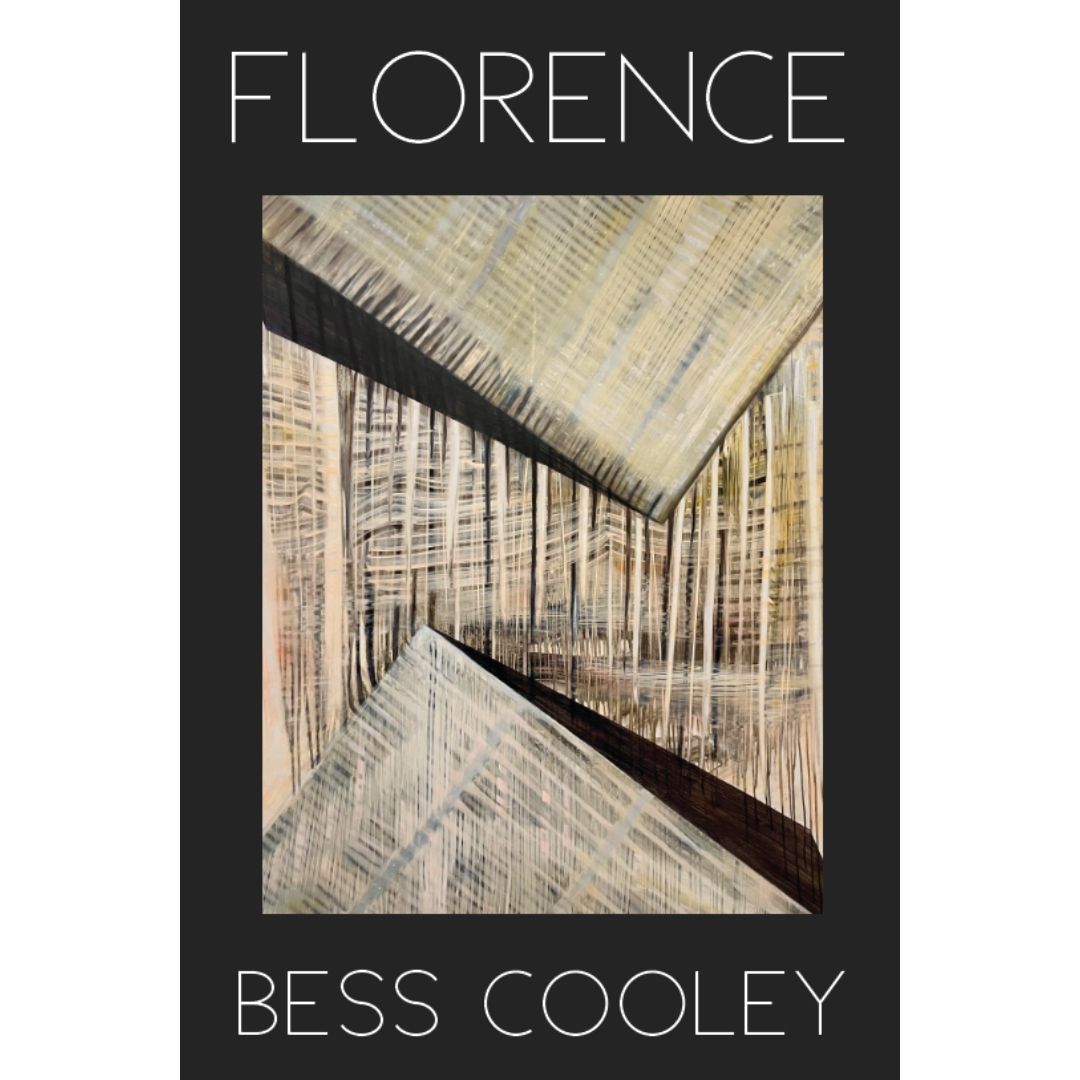
Bess Cooley’s Florence is an artful and touching collection of poems with piercing meditations on loss, time, and memory. Cooley’s speaker muses about how changes in the body and brain can alter identity, faced with their own body’s vulnerabilities and the difficulty of aiding a grandfather through dementia. Intimately linked with the speaker’s journey, the poems are a stunning portrayal of the wishes, regrets, and intricacies of a mind’s lifetime. The speaker dips in and out of reality, and the reader is welcome to follow. Lines like “I’ve been writing love poems to my grandfather / who has started to call me the poet, the stranger poet” offer pause and possibility. With an altered mind, reality shifts; but perhaps the erasure of one reality opens room for another. Cooley’s poems are the kind you come back to repeatedly to find wisdom, warmth, or remembering. In Florence, the speaker’s is an inspiring account of rebuilding after loss, and making sense of what is left.
Erasure is the rhythm of Bess Cooley’s beautiful, eerie, haunting debut collection. Erasure of a beloved grandfather lost to the whiteout of Alzheimer’s. Erasure of the poet’s childhood, where that grandfather taught her the stars, planets, and constellations, which now he cannot name. Possible erasure of the poet’s own brain by a growth that proves benign and is called an arachnoid, or “spider,” cyst. How terribly fitting then, that the formal principle underlying this book is that Cooley performs rigorous erasures on one poem after another to discover a hidden lyric clarity: “Come home / remember / the way / memory / loops / backward and forward, / one / last / rebuild ”. Through erasures, through the spider poet’s nonlinear loopings of word webs, Cooley rebuilds her vanishing world, which is also our world, which she reclaims as a shining Crystal Palace, edifice of fragile glass we see through to behold who and what we were, are, and will become.
—Donald Platt, author of Swansdown
This meditative, sharp collection offers what we seek from elegy: not just tribute to what has been lost, but an entry into the question of what can—against all odds—be kept. In poems that reveal the manifold ways we can become alien to ourselves and to those closest to us, the speaker considers her own body, the way it has absorbed, via transfusion, the blood of strangers, considers how her grandfather’s memory slips away, as if water through “cupped hands.” One illustration of Cooley’s potent navigation of these ideas arrives in poems that reappear later as erasures of themselves, whose remaining words have the feel of stepping stones. The book offers no easy shortcuts, but shows one way to balance carefully across the still water of loss.
—Rosalie Moffat, author of Making a Living
The lost, those beloved and otherwise, live in this book—what to do with human ashes past and future; a grandfather playing the grandfather in Heidi as he climbs the mountain of childhood’s basement stairs; how a life ends when someone else’s does. “Show me the bright planets,” this poet nevertheless insists, time-traveling back fearless, full of calm urgency. These poems haunt even themselves. Concerning an IV drip, courtesy of generous strangers: “How long before my blood’s mine again?” Bess Cooley asks. And the world multiplies and deepens.
—Marianne Boruch, author of Bestiary Dark