
Dear,, Adrie Rose
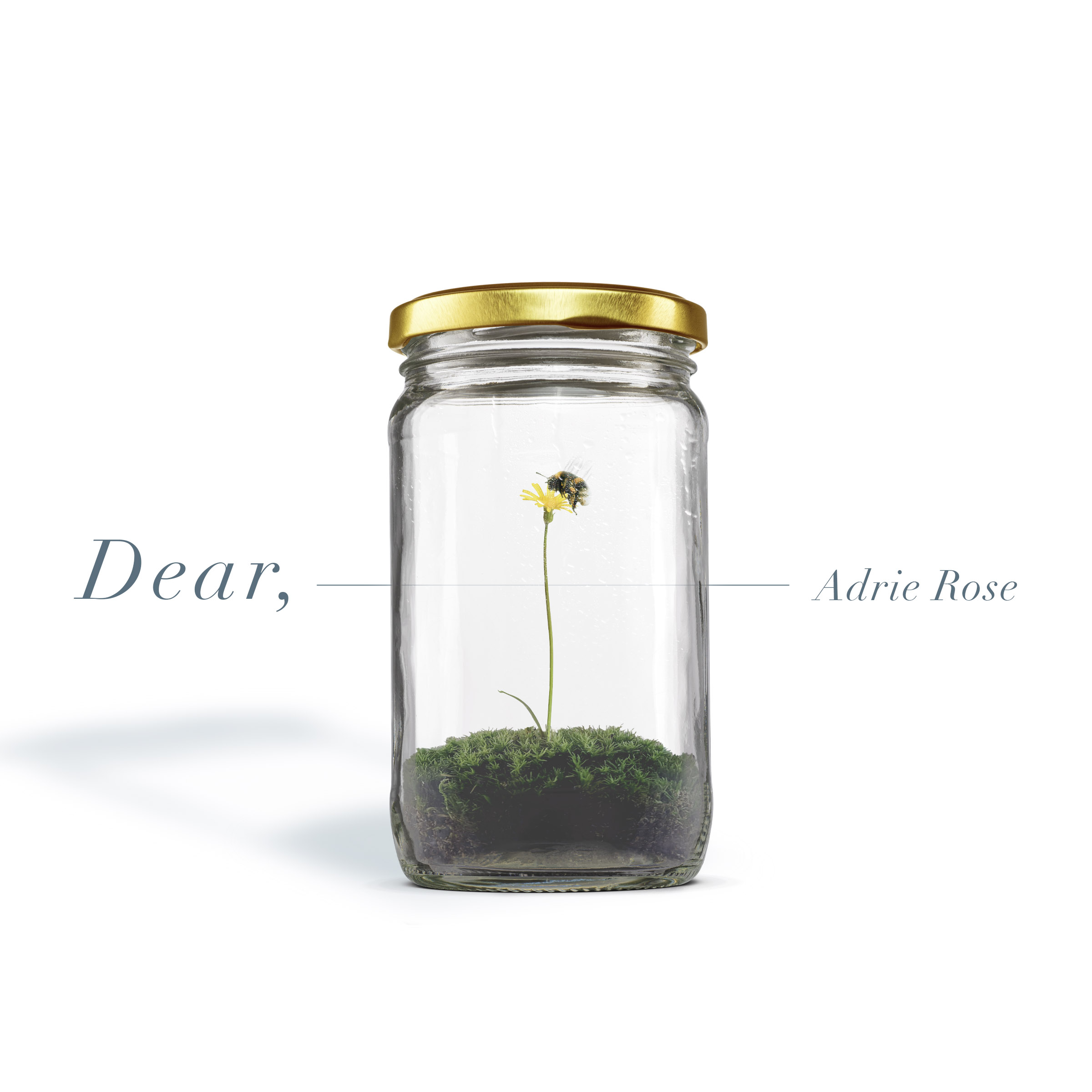
Adrie Rose’s Dear, records a mother’s life after her teenage child is diagnosed with EDS and dysautonomia, conditions the mother herself has unknowingly lived with. The chapbook revolves around two sequences. The “Diagnosis” poems unfold across the four seasons in lyric fragments, entering into the intricate, unbearable moments: a harvest missed, a sentence trailing into a dash, a doctor’s prognosis buried beneath the story of a bat. “Diagnosis: The Name,” in response to Cynthia Huntington’s “Multiple Sclerosis,” portrays the strange hollowness of a clinical label late for thirty-eight years. The breathless “Dear,” poems, written as prose letters to no one and everyone, follow the mother’s attempts to ease the pain of her child’s illness while struggling to make ends meet. “There is a bottle bobbing in the water and we are under the water and we are the message inside, hoping someone will lift us out and read us,” and perhaps the essence of the collection unfolds: the mother’s monologues accumulate, echo, and contradict one another to become a message to whoever might listen. Rose renders chronic illness in precise, almost forensic detail: insurance costs itemized like a receipt; a cento that stitches lines from writers such as Johanna Hedva and Martha Wells until the clinical language meets breadcrumbs, chicken broth, a blue-striped teacup, and a jar of rose-scented body cream that becomes impossible to smell again without flinching. To read this collection is to discover how many layers of courage “Dear,” can hold at once, and to watch a narrative that moves through every season yet refuses to resolve into anything merciful.
***
“What should it cost to receive or give care? Adrie Rose wrangles with this question in Dear, a chapbook anchored around a prose poem sequence which expands one family’s story into a critique of the ‘dear’ costs of the medical industrial complex. Through the perspective of a parent, Rose’s poems illustrate the multiple and contradictory pressures of caretaking in a capitalist world, where expectations of self-effacement and sacrifice are just as loud as mottoes for self-care. No, Dear, will not give you a recovery narrative. Instead, in centos, bread, the seasonal blooms, and windows within and between emergencies, recovery is not medical healing but a reclaiming of life—what to make of these crumbs that are available when time, attention, and bodies are divided, to have it out not as ‘tidy open spaces’ but ‘a body taken back by black locust.’ These poems and letters may be addressed to no one, but bound together, they are for anyone near and dear enough to these experiences, to be found like the moon floating one night out the hospital window, a moment of reprieve and recognition beyond these human-made emergencies.”
—Yanyi, author of Dream of the Divided Field
“While this is the story of the long, unglamorous emergency of caring for a chronically ill child by a mother who learns she’s carrying the same illness, it refuses the easy shape of a sickness narrative and instead delivers real fury. Rigorous, unflinching, and formally inventive, Dear, doesn’t try to make illness legible or meaningful for the reader’s comfort. It just tells the truth, over and over, in whatever shape the truth demands that day. I won’t forget it.”
—Ellen Doré Watson, author of Pray Me Stay Eager
“’When does a story about sickness begin? When does it end?’ asks Adrie Rose in this brief, luminous series of prose epistles, lyric fragments, and supple stanzas about the body’s emergencies, about loving and mothering a sick person and, perhaps strangely, surprisingly, about loving the illness. Dear, sings with anguished music; it’s also documentary writing in which what is exhausting becomes glorious and what is intimate and domestic becomes expansive. It’s a rare thing in poetry, to show us something new: this book does.”
—Daisy Fried, author of My Destination
***
Adrie Rose lives next to an orchard in western MA and is the editor of Nine Syllables Press. Her work has previously appeared or is forthcoming in Prairie Schooner, Poetry Northwest, Graywolf Lab: Games, Beloit Poetry Journal, The Massachusetts Review, Ploughshares blog, and more. Her chapbook I Will Write a Love Poem was published in 2023 by Porkbelly Press, and her chapbook Rupture was published in 2024 by Gold Line Press and longlisted for the MA Book Award. She was a finalist for The Pablo Neruda Prize for Poetry in 2021, named a Highly Commended Poet for the International Gingko Prize in 2023, and won the 2023 Radar Coniston Prize. She won the Anne Bradstreet Prize from the Academy of American Poets in 2022. She holds an MFA in Poetry from Warren Wilson College.