Floralia, Kimberly Ann Priest
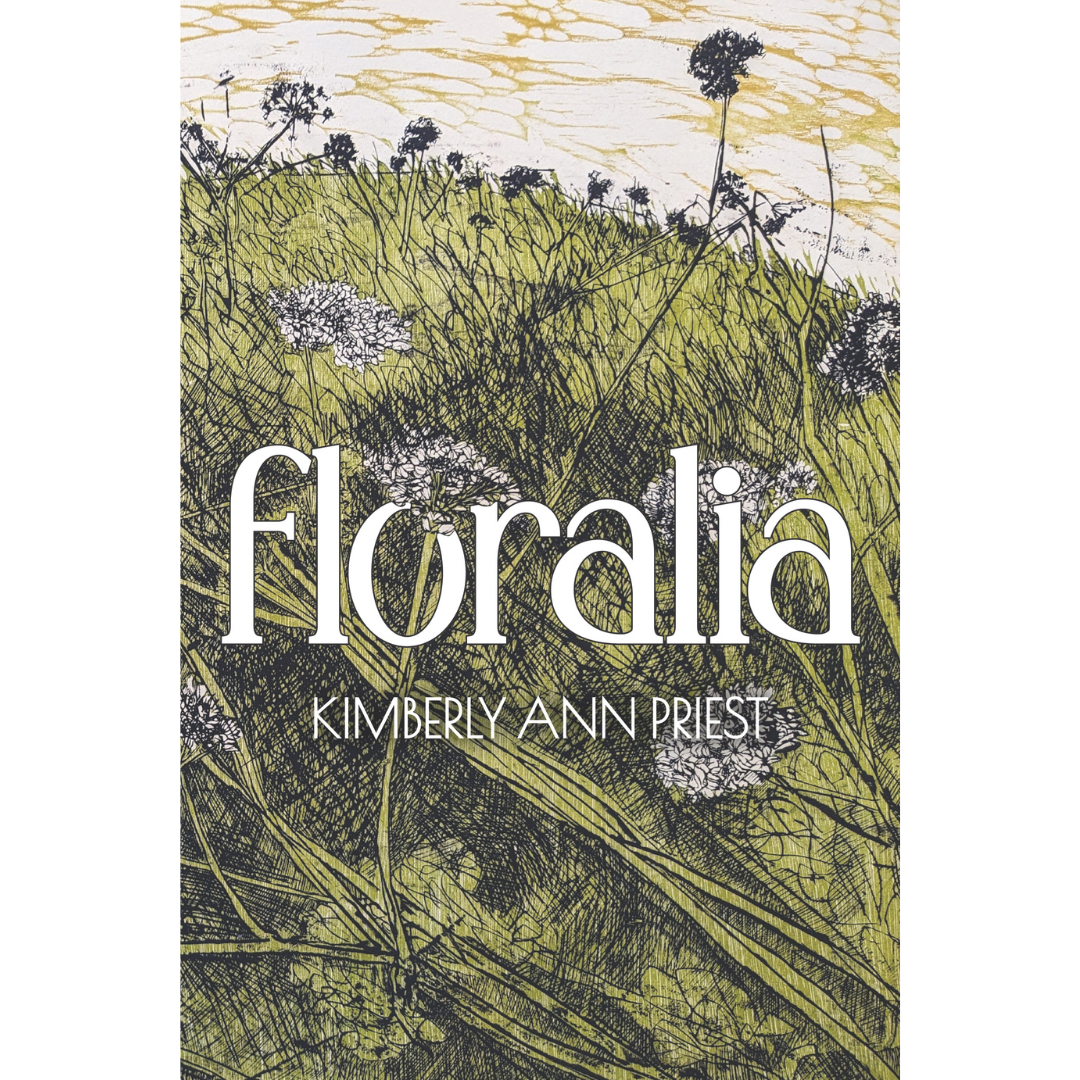
Kimberly Ann Priest captures the specter that haunts survivors of assault in Floralia, a stunning collection that is part poetry, part radio show, and part botany lesson. Priest skillfully uses the natural world—in particular, flowers—as a vehicle to explore traumatic dissociation from the self. Butterflies flutter, succulents burst forth in laughter, and amaranth is pondered as both an herb and a weed in gestures to raw violence both subtle and blunt. The radio show’s protagonist converses with her own ghost, navigating the spectacle of her assault and the desire for it to be both witnessed and suppressed. I want you to notice the track marks on my arms is the plea in “Tell me you are listening”—another speaker seeking both witness and relief, again accenting the contradictory needs and desires of trauma. Floralia holds agony and mundanity in parallel, interrogating the performance of pain and its social response, whether from therapists, partners, the media—even you, the reader. Yet inside this dialectic tension between visibility and protection, Floralia manages to hope, with the possibility of healing and growth promised in a future spring’s full and fragrant bloom.
*
Like the eponymous flowers, the poems in Floralia oscillate, beautifully, between the familiar and strange, between the therapeutic and poisonous. It’s unsettling and cinematic, as if, on the other side of these pages, someone was holding a showing of Hiroshima Mon Amour.
—Sam Cha, author of The Yellow Book
With Floralia, Kimberly Ann Priest takes readers into the aftermath of sexual abuse—the flashes of memory, the gaps, the therapy, the survivor’s strange relationship with her family and her own body. Using flowers as both metaphor and a source of grounding, these poems brilliantly capture thoughts and experiences that are almost impossible to put into words. “Tell me you are listening,” she says. Yes, I’m listening. Everyone needs to read this book.
—Katie Manning, Editor-in-Chief of Whale Road Review
Grief here is an inescapable weather—every moment has, if not the feel of rain, the smell. In a poetry that is as compassionate as it is beautiful, Priest shows us how even attempting to name a trauma is a nonlinear effort, a heart’s ongoing work.
—Chen Chen, author of Your Emergency Contact Has Experienced an Emergency
“People do you know. [Survive.] Mostly women,” writes Kimberly Ann Priest in her expansive and often disquieting new collection Floralia. Her poems take risks in style and form that make them edgy and keen; and, despite the book’s difficult narrative of missing and exploited women, drug addiction, and the often-precarious struggle to survive, these risks make it a wonder to read. Our culture is so anesthetized to violence that it’s easy to ignore or compartmentalize its terror and its hate. Floralia shakes us out of that complacency and demands we pay attention.
—Lynn Melnick, author of Refusenik and I’ve Had to Think Up a Way to Survive
In Floralia, “The woman lingers over her records, her classifications.” Relentlessly and wildly, these poems perform the attempt to document, count, and record what Kimberly Ann Priest shows us can never truly be articulated. But as much as these poems “wound around” and around through trauma and grief they weave equally as much through beauty. Priest is always a poet we can count on to “risk making breeze,’ and these poems are prepared to risk everything.
—Lauren Goodwine Slaughter, author of Spectacle and editor-in-chief of NELLE